
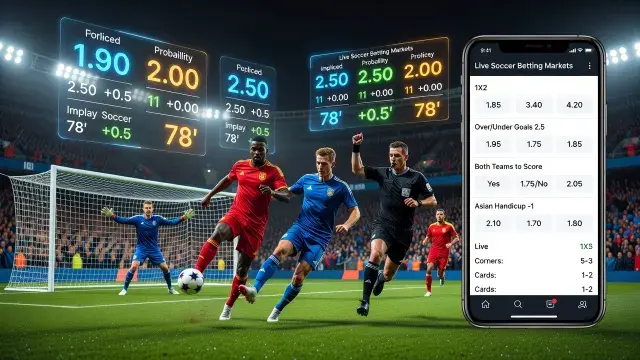

A single decimal point separates a profitable betting strategy from a losing one. Odds of 1.90 versus 2.00 on the same outcome might look nearly identical, but across a hundred bets, that difference compounds into a real financial gap. Most casual bettors never notice it. They see a number, place a wager, and move on. The ones who consistently come out ahead treat odds as information, not decoration.
Soccer betting has grown into a global activity precisely because the sport itself resists easy prediction. Ninety minutes, one ball, and outcomes that swing on a deflection or a referee's whistle. That unpredictability is exactly what makes understanding the mechanics behind soccer odds so valuable. Anyone serious about improving their results needs a working knowledge of how bookmakers price matches, how betting markets shift, and where genuine value hides. For readers who want a structured starting point, resources covering the basics of soccer betting can clarify terminology and market types before real money gets involved.
This piece breaks down how odds are built, what the major betting markets actually mean, how live soccer betting changes the calculus mid-match, and how to use football match predictions without falling into common traps. The goal is practical literacy - not guaranteed wins, but sharper decisions.
Understanding Soccer Odds: The Foundation of Every Bet
What Soccer Odds Actually Represent
Odds are not a forecast of what will happen - they are a reflection of probability, adjusted for the bookmaker's margin. When a team is priced at 2.50 to win, that number implies a specific implied probability, roughly 40%, before any commission is factored in. Bookmakers build in a margin across all outcomes so that regardless of the result, they retain an edge over time. Recognizing this margin, often called the "overround," is the first step toward reading odds critically rather than accepting them at face value.
Decimal, Fractional, and American Formats
Odds appear in three formats depending on the platform or region. Decimal odds, common across Europe and increasingly worldwide, show the total return per unit staked. Fractional odds, still popular in the UK, express profit relative to stake. American odds use positive and negative numbers to indicate underdog and favorite pricing. Converting between formats matters less than understanding what each one communicates about probability and payout.
How Bookmakers Set Initial Prices
Opening odds are built from statistical models, historical data, team form, injuries, and market expectations. These models are refined constantly, but they are starting points, not final judgments. As money flows in from bettors and syndicates, prices adjust. This is why odds on the same match can differ noticeably between operators, and why comparing prices before placing a wager is a habit worth building.
Betting Markets Beyond the Match Winner
1X2 and Double Chance Markets
The most basic betting markets revolve around the match result: home win, draw, or away win, commonly labeled 1X2. Double chance markets extend this by allowing a bet on two of the three outcomes combined, reducing risk at the cost of lower payouts. These markets suit bettors who want straightforward exposure without additional variables.
Over/Under, Both Teams to Score, and Handicaps
Goal-based markets shift the focus away from who wins toward how the match unfolds. Over/Under markets ask whether total goals will exceed or fall short of a set line. Both Teams to Score is binary and often less volatile than match-winner bets. Asian and European handicaps level the playing field between mismatched teams, making lopsided fixtures more interesting to price and bet on.
Specialized and Niche Markets
Beyond the core options, operators offer markets on corners, cards, specific goalscorers, and even minute-by-minute events. These niche betting markets require deeper research but can offer better value precisely because fewer bettors analyze them closely, meaning prices sometimes lag behind actual probability.
- 1X2 (match winner)
- Double chance
- Over/Under goals
- Both Teams to Score
- Asian and European handicaps
- Corners, cards, and player-specific markets
Live Soccer Betting: Reading the Game in Real Time
How In-Play Odds Shift During a Match
Live soccer betting operates on a different rhythm than pre-match wagering. Odds update continuously based on possession, shots on target, momentum, and scoreline changes. A team trailing 1-0 at halftime but dominating possession might still carry reasonable odds to equalize, and recognizing that gap between perceived and actual chances is where sharp in-play bettors find value.
Timing Your Bets During a Match
The best in-play opportunities often appear in short windows - right after a goal, following a red card, or during a substitution that shifts tactical balance. Watching the match itself, not just the odds ticker, gives context that raw numbers cannot fully convey. Reaction speed matters, but so does restraint; not every shift in momentum justifies a bet.
Risks Unique to In-Play Wagering
Live betting compresses decision-making time, which increases the temptation to chase losses or bet impulsively. Odds can also move against a bettor within seconds of placing a wager if the platform detects a shift in probability. Setting personal limits before the match starts helps counter the adrenaline factor that live betting introduces.
Using Football Match Predictions Effectively
Where Predictions Come From: Data, Form, and Models
Football match predictions typically draw from a mix of statistical modeling, historical head-to-head records, current squad form, and situational factors like fixture congestion or travel. Advanced models weigh expected goals, defensive solidity, and home advantage differently depending on the league and competition. No single data point tells the full story; predictions work best as a synthesis.
How to Evaluate a Prediction's Credibility
Not all predictions carry equal weight. A credible forecast explains its reasoning - form trends, injury reports, tactical matchups - rather than offering a bare conclusion. Bettors should be wary of predictions that ignore context, such as a team's recent run of form against similarly styled opponents, or that fail to account for motivation, like a mid-table clash with nothing at stake for either side.
Combining Predictions With Personal Analysis
The strongest approach treats external predictions as one input among several, not a final answer. Cross-referencing a prediction against current odds reveals whether the market has already priced in that outcome. If a prediction and the odds align closely, there's little edge left. Genuine value often surfaces when your own analysis diverges from the crowd's expectation.
Practical Soccer Betting Tips for Consistent Results
Bankroll Management Basics
No strategy survives poor bankroll discipline. Successful bettors stake a small, consistent percentage of their total bankroll per wager, typically between one and three percent, rather than adjusting stake size based on confidence or recent results. This approach smooths out variance over the long run and prevents a single bad week from erasing months of gains.
Shopping for the Best Odds Across Markets
Because bookmakers price the same match differently, comparing odds before betting is one of the simplest ways to improve long-term returns. A half-point difference in odds, repeated across dozens of bets, adds up to a meaningful shift in profitability. Serious bettors often maintain accounts with multiple operators for exactly this reason.
Avoiding Emotional and Impulsive Bets
Loyalty to a favorite club, frustration after a loss, or overconfidence following a winning streak all distort judgment. Treating each bet as an isolated decision, evaluated on its own merits, keeps emotion from overriding analysis. Keeping a record of past bets - including the reasoning behind them - helps identify patterns of bias over time.
Common Mistakes to Avoid in Soccer Betting
Ignoring the Bookmaker's Margin
Bettors who focus only on potential payout while ignoring the built-in margin consistently overestimate their expected returns. Understanding that every market carries a house edge reframes the goal: finding value relative to true probability, not just chasing high payouts.
Overreliance on Single Data Points
Betting heavily on one statistic - a team's recent win streak, for instance - while ignoring underlying performance quality is a frequent error. Form can be misleading when it results from a soft run of fixtures rather than genuine improvement.
Chasing Losses With Bigger Stakes
Increasing bet size after a loss to recover money quickly is one of the fastest ways to deplete a bankroll. Discipline around stake size should remain constant regardless of recent outcomes, win or lose.
Frequently Asked Questions
What's the difference between odds and probability?
Odds reflect the payout structure offered by a bookmaker, while probability is the actual statistical likelihood of an outcome. Odds include a built-in margin, so the implied probability from odds is always slightly higher than the bookmaker's true assessment of the chance an event will occur.
Is live soccer betting riskier than pre-match betting?
It carries different risks rather than simply more risk. The compressed timeframe for decisions can lead to impulsive choices, but bettors who watch the match closely and react to genuine tactical shifts can find value that isn't available before kickoff.
How much should I trust football match predictions from tipsters or models?
Treat predictions as one data point among several, never as a guaranteed outcome. Evaluate the reasoning behind a prediction rather than the conclusion alone, and compare it against current market odds to see if any edge remains.
What's the safest betting market for beginners?
Double chance and Over/Under markets tend to carry lower variance than outright match-winner bets, making them a reasonable starting point for newcomers still learning how odds and markets behave.
How do I know if I'm getting good value on a bet?
Value exists when your estimated probability of an outcome is higher than the probability implied by the odds offered. This requires comparing your own analysis, or a credible prediction, against the current market price rather than betting on gut feeling alone.
Should I stick to one bookmaker or use several?
Using several operators allows you to compare odds on the same match and consistently secure better prices, which compounds meaningfully over a large number of bets. The tradeoff is more accounts to manage, but the financial benefit generally outweighs the inconvenience.


